
When patients ask us how light can actually reduce pain, the answer lies in cellular biology, not guesswork. Class 4 laser therapy uses specific wavelengths of light that are thought to stimulate activity inside your cells, from lowering inflammatory cytokines to supporting mitochondrial energy production. It’s a process called photobiomodulation, and the clinical evidence behind it continues to grow. Understanding what’s happening beneath the surface can help you decide whether this treatment belongs in your recovery plan.
What Is Class 4 Laser Therapy?
When patients ask about advanced pain relief options, Class 4 laser therapy stands out as a high-powered form of photobiomodulation (PBM) that uses specific wavelengths of light to penetrate deep into tissue. Unlike lower-power cold lasers, this high-intensity laser therapy delivers energy to deeper structures such as nerves, muscles, ligaments, and tendons while remaining non-invasive. You may feel brief warmth, but we’re targeting cellular repair, not heat.
Which Conditions Does Class 4 Laser Therapy Treat?
We use Class 4 laser therapy to help manage arthritis, tendonitis, bursitis, sprains, and strains by delivering targeted light energy to inflamed tissues. We also use it for chronic back pain, nerve-related conditions like sciatica, and recovery after surgery. Peer-reviewed research, including systematic reviews, supports its role in reducing pain and improving function, with stronger evidence for some conditions than others.
How Does Class 4 Laser Therapy Relieve Pain?
Class 4 laser therapy relieves pain through a process called photobiomodulation (PBM), in which high-intensity light photons penetrate tissue and interact with cytochrome c oxidase in cell mitochondria. This interaction is thought to trigger a biological cascade that increases microcirculation, lowers pro-inflammatory cytokines like IL-1 and TNF-α, and supports cellular repair. Many of our patients notice relief during or soon after their Class 4 laser therapy sessions as these biochemical changes take effect.
What Does a Class 4 Laser Therapy Session Feel Like?
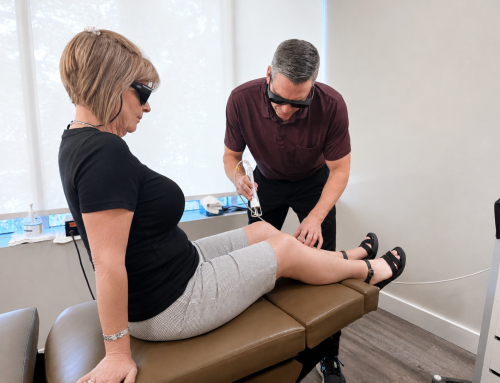
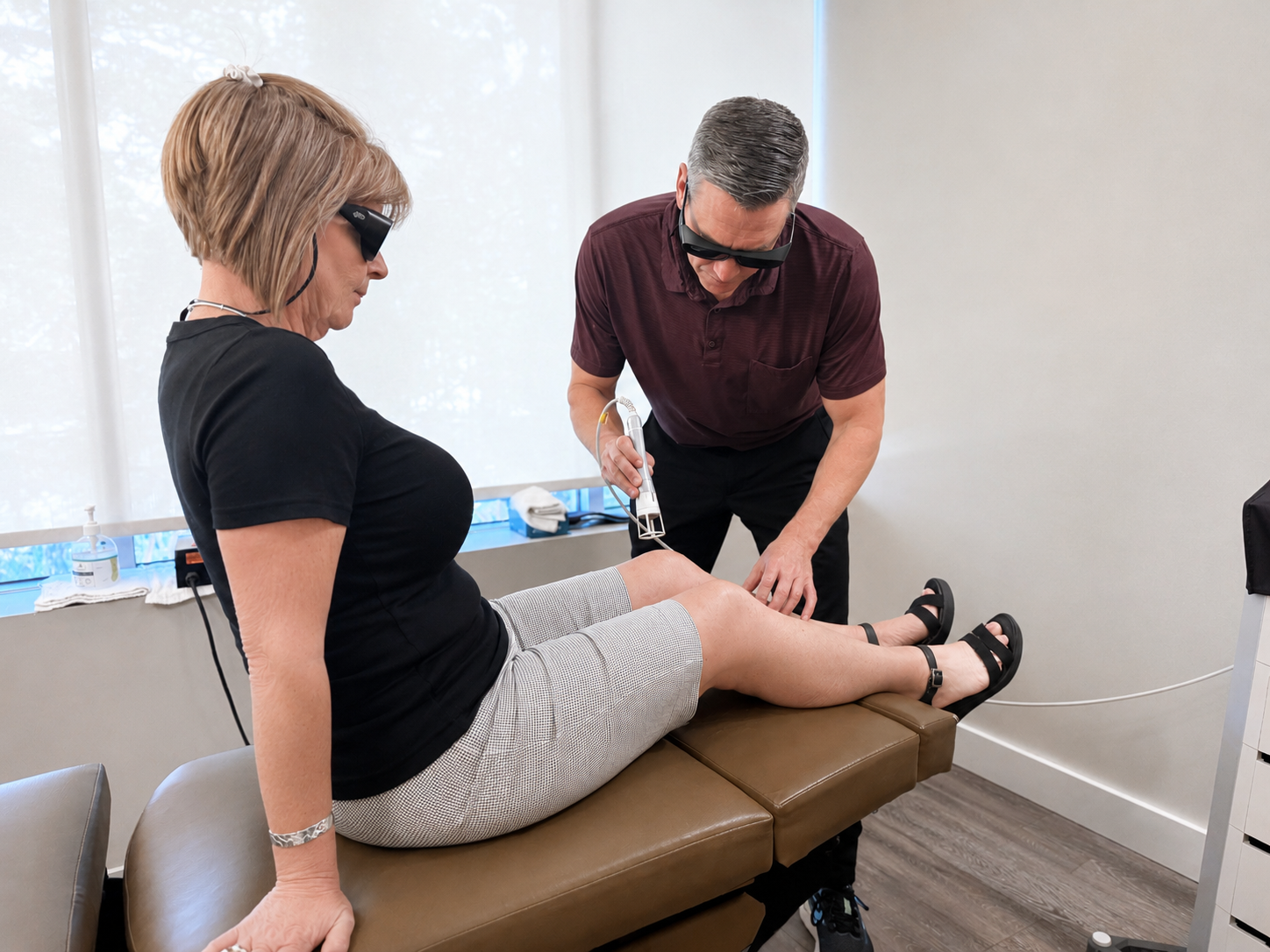
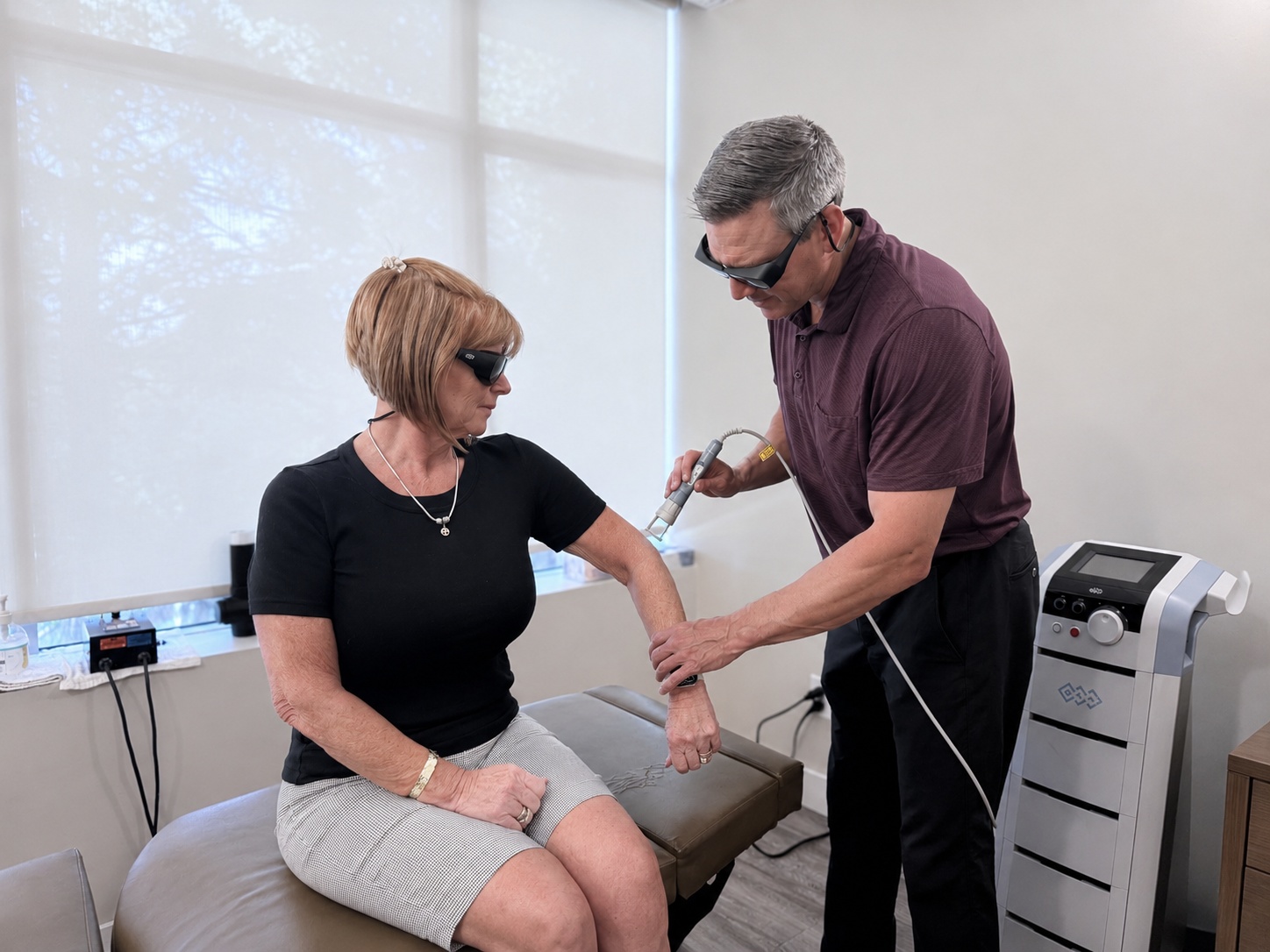
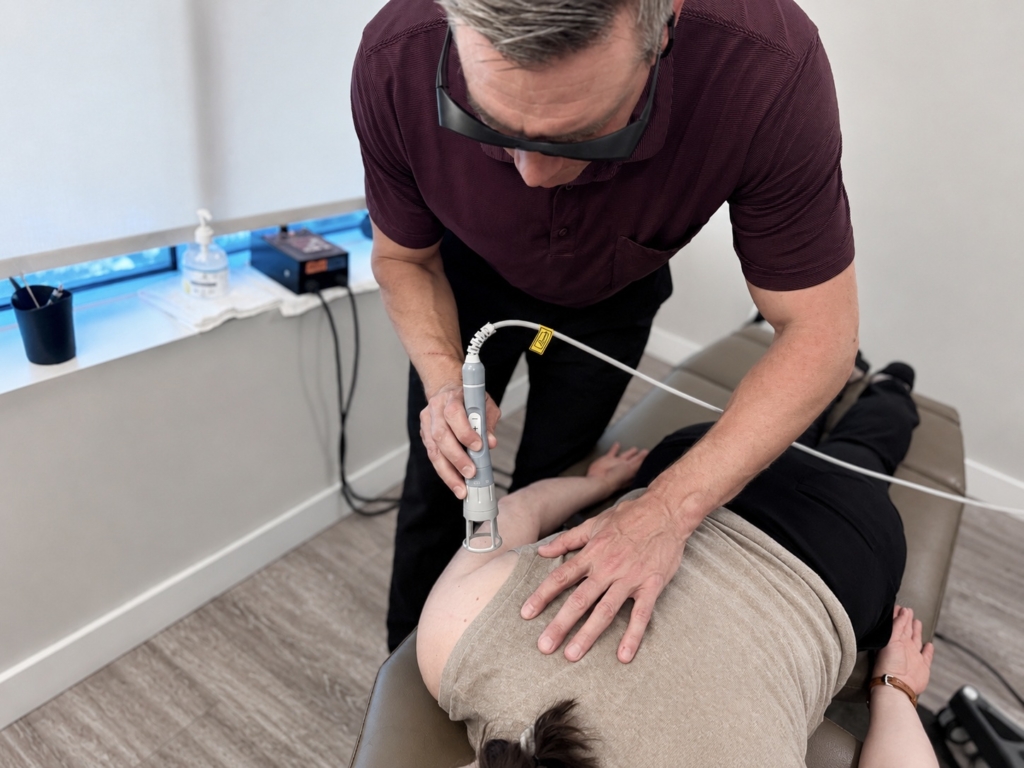
Most patients are surprised by how comfortable a Class 4 laser therapy session actually is. After we fit you with certified protective eyewear, we’ll guide a handheld applicator over the targeted area while you relax. You may notice gentle warmth or mild skin flushing, but there’s no pain. Sessions typically last 3–10 minutes, require no downtime, and you can resume normal activities immediately.
How Quickly Does Class 4 Laser Therapy Work?
Exactly when you’ll notice results depends on factors like the severity of your condition, the depth of the affected tissue, and how acutely inflamed the area is, but many patients report noticeable pain relief during or shortly after their very first session. Because Class 4 lasers deliver energy at higher power, they can reach deeper structures with an effective dose more quickly, supporting pain relief that builds cumulatively over 6 to 12 sessions.
Questions Often Asked
Is Class 4 Laser Therapy Safe?
Yes, the device we use is licensed by Health Canada, and the treatment is non-invasive and drug-free, with most patients feeling only mild warmth
What Is The Difference Between Class 4 and Class 3 (Cold) Lasers?
Class 4 lasers run at higher power, so they can deliver an effective dose to deeper structures like joints and nerves faster than lower-power cold lasers.
How Many Sessions Will I Need?
Most patients need about 6 to 12 sessions, since the effects build cumulatively from one visit to the next.
Can Class 4 Laser Therapy Be Combined With Chiropractic Adjustments
Yes, and we often use them together because reducing inflammation first can make adjustments more comfortable and longer lasting.
Who Should Avoid Class 4 Laser Therapy?
We avoid treating over active cancerous lesions, the abdomen during pregnancy, and certain implanted devices, and we use caution with photosensitive epilepsy, so let us know your health history before we begin.