

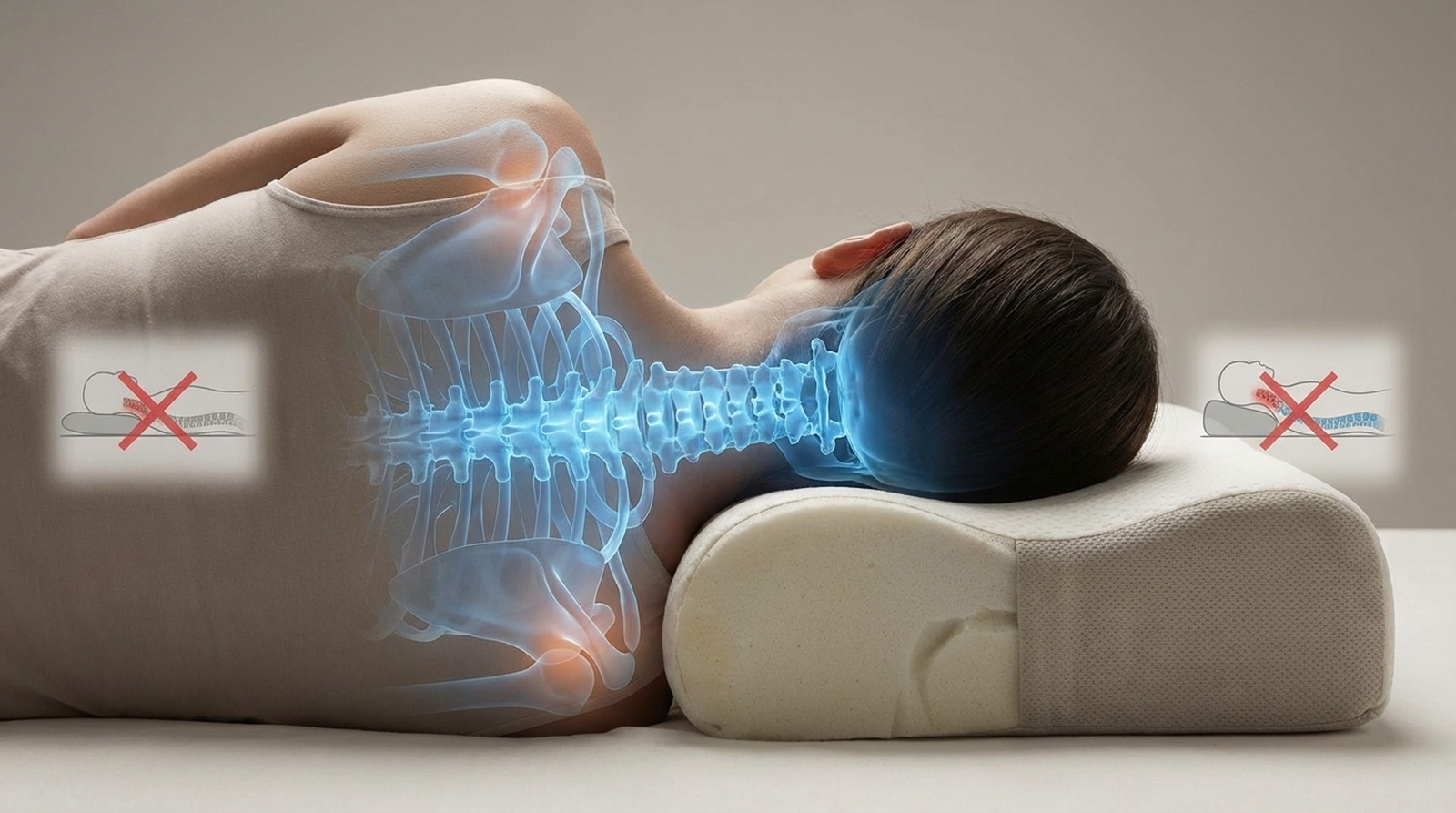
Your pillow matters more than you might think, and studies show that nearly 70% of Canadians will experience neck pain at some point in their lives. A pillow isn’t just bedding. It’s an orthotic device that supports your neck while you sleep.
When you choose the right pillow, it keeps your spine in neutral alignment and helps your body heal properly during the night. At Clayton Heights Chiropractic, we help patients throughout Surrey, Clayton Heights, and Cloverdale find the proper support they need for better sleep and reduced pain.
The Relationship Between Pillow Support and Spinal Alignment
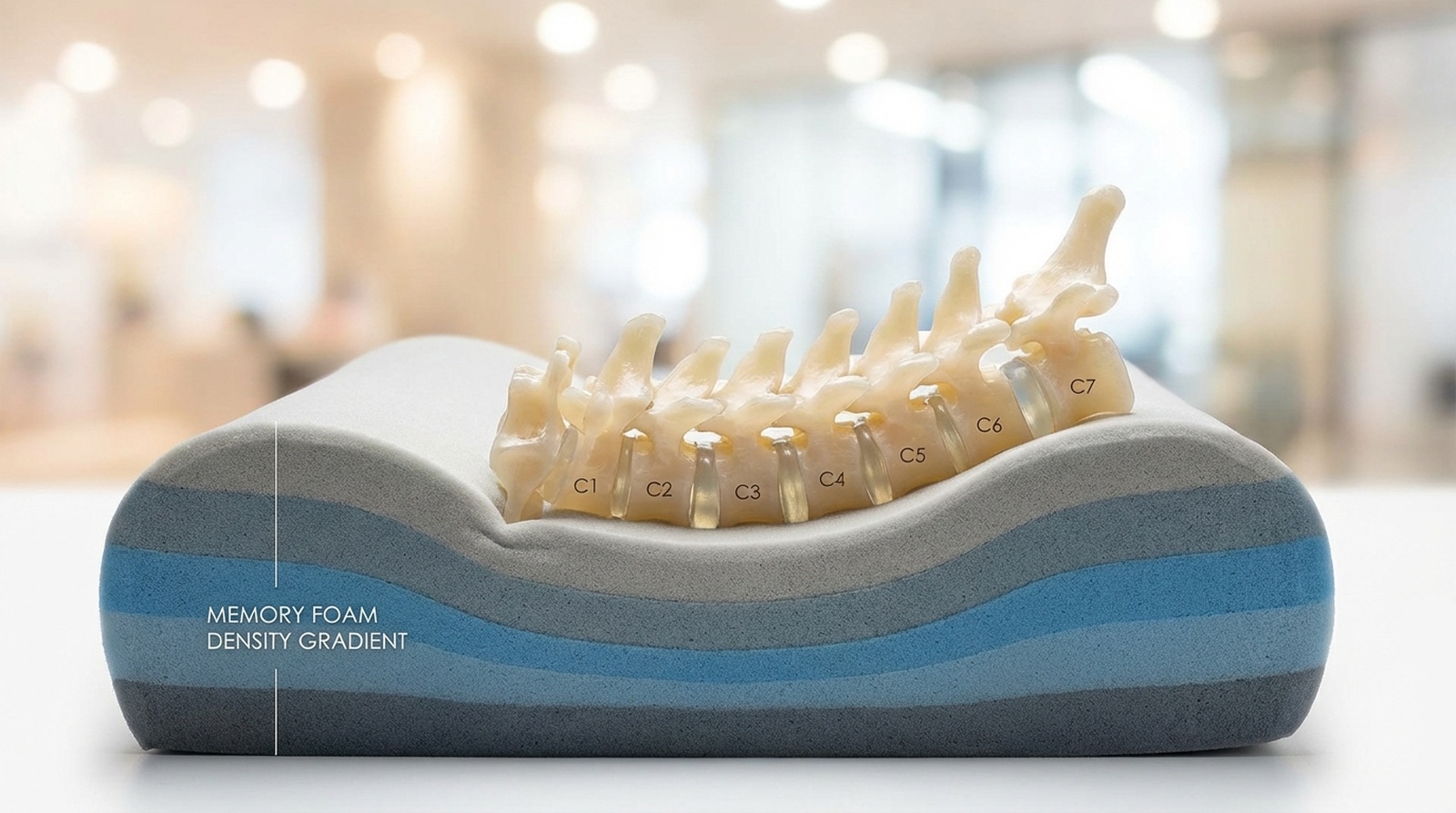
The right pillow plays a vital role in your neck health, and when you sleep without proper support, your cervical spine loses its natural curve. This puts strain on your neck muscles and ligaments, leading to discomfort and stiffness.
We see this issue regularly in our clinic. By choosing the right ergonomic support, you can restore proper spinal alignment and reduce that persistent neck pain. We’re here to help you understand what your body needs for truly restful sleep.
Assessing Your Sleep Position and Individual Needs
We begin by determining how you naturally sleep, and this gives us the right starting point for proper neck support. From there, we assess the pillow height needed to keep your shoulders and spine aligned with your mattress. Our goal is to match this height to the way your body rests, so your body stays properly aligned throughout the night.
Identifying Sleep Positions
Your sleep position determines what kind of back support you need, and understanding this helps us recommend the right pillow for you. Here’s how each position affects your back:
- Side sleeping – requires a pillow that fills the gap between your shoulder and head
- Back sleeping – needs support that maintains your neck’s natural curve
- Stomach sleeping – works best with minimal pillow height to reduce neck strain. However, we do not recommend sleeping on your stomach for a variety of reasons.
- Combination sleeping – benefits from an adaptable pillow that supports multiple positions
Understanding your sleeping pattern is the first step towards choosing the right support.
Determining Ideal Height
Since one size doesn’t fit everyone, we need to find the precise height required to maintain neutral spinal alignment for your body. We’ve found that side sleepers typically benefit from 5 to 7 inches of loft, whilst back sleepers usually need around 4 to 5 inches.
The correct pillow height keeps your head and neck level with your spine, preventing your shoulders from rolling forward. This approach supports proper alignment throughout the night, which helps reduce morning stiffness and pain.
Material Matters: Memory Foam, Latex, Waterbase and More
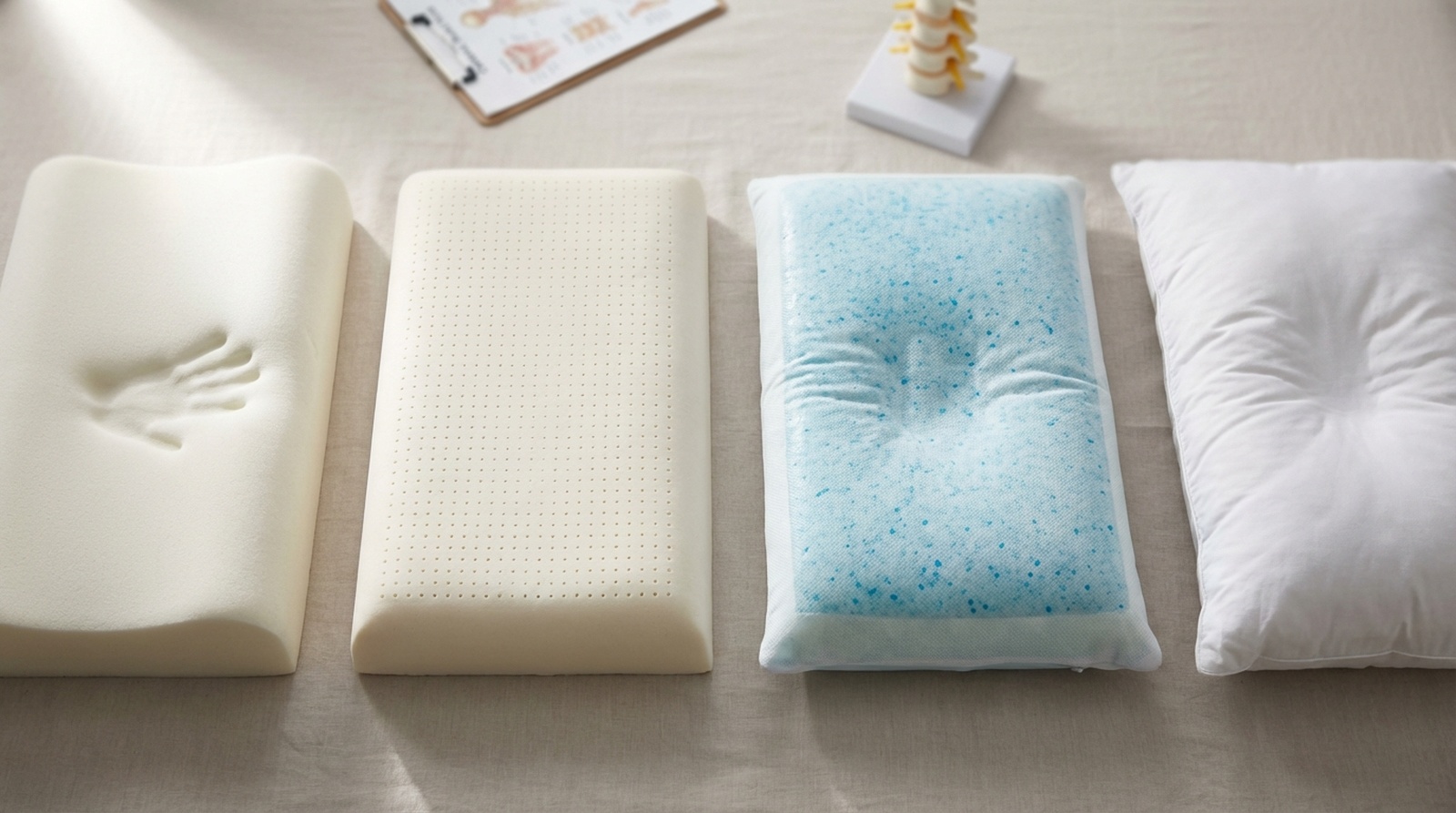
The material your pillow is made from significantly affects how well it supports your neck, and different materials offer different benefits. Here’s what we commonly recommend:
The right materials keep your spine aligned so you can wake up properly rested.
- Memory foam moulds to your unique shape and provides consistent support
- Latex offers support with a gentle bounce
- Down or feather delivers soft, adjustable comfort but may compress over time.
- Water-based pillows adjust and respond as you move throughout the night
Finding the Right Loft and Firmness
Proper neck support depends on choosing the right loft (height) and firmness for your body and sleeping position.
Side sleepers generally need higher lofts to fill the space between the shoulder and head. Back sleepers typically do better with medium height and firmness to support the neck’s natural curve.
Your body weight and shoulder width also play a role. Broader shoulders or heavier builds often require more loft to maintain proper alignment.
Expert Tips for Maximizing Pillow Effectiveness
Beyond choosing the right pillow, proper positioning makes a significant difference. We recommend ensuring your pillow height keeps your head level with your spine for optimal alignment. You should also replace your pillow every 18 to 36 months, as materials compress and lose support over time. When possible, avoid sleeping on your stomach, as this position puts the most strain on your neck. If you’re unsure whether your current pillow provides adequate support, we’re happy to assess your needs during a visit to our clinic.
Frequently Asked Questions
What Kind of Pillow Is Best for the Back?
For proper spinal support, we often recommend memory foam or latex pillows, as these materials maintain their shape throughout the night and provide consistent support for your neck and back. Side sleepers typically need 13 to 18 CM of height, whilst back sleepers usually do well with 1 to 3 inches. At Clayton Heights Chiropractic, we can help you determine what works best for your sleeping style and body type.
What Is the Pillow Positioning Technique for Back Pain?
One effective positioning technique involves using multiple pillows for support, and this can make a significant difference in how you feel. You can place two pillows under your head (or one proper cervical pillow), one pillow between your knees if you’re a side sleeper, or one pillow under your knees if you sleep on your back. This setup supports your spine’s natural curves and helps reduce pressure on your lower back throughout the night.
How Do I Choose the Right Back Pain Pillow?
We recommend starting with memory foam or latex options, as these materials maintain proper spinal alignment throughout the night. Look for a medium loft height that supports your neck’s natural curve without pushing your head too high or letting it drop too low. The right pillow should feel comfortable immediately. If you wake up with neck stiffness or headaches, your current pillow likely isn’t providing adequate support.
What Pillow Do Chiropractors Recommend for Back Pain?
As chiropractors, we frequently recommend memory foam, latex, or water-based pillows (such as Chiroflow) because they contour to your neck’s natural curve whilst providing consistent support. We particularly like adjustable options that let you customize the height and firmness, giving you the ergonomic support needed to keep your back properly aligned whilst you rest.